All speciesPot-caught Australian

Australian Octopus

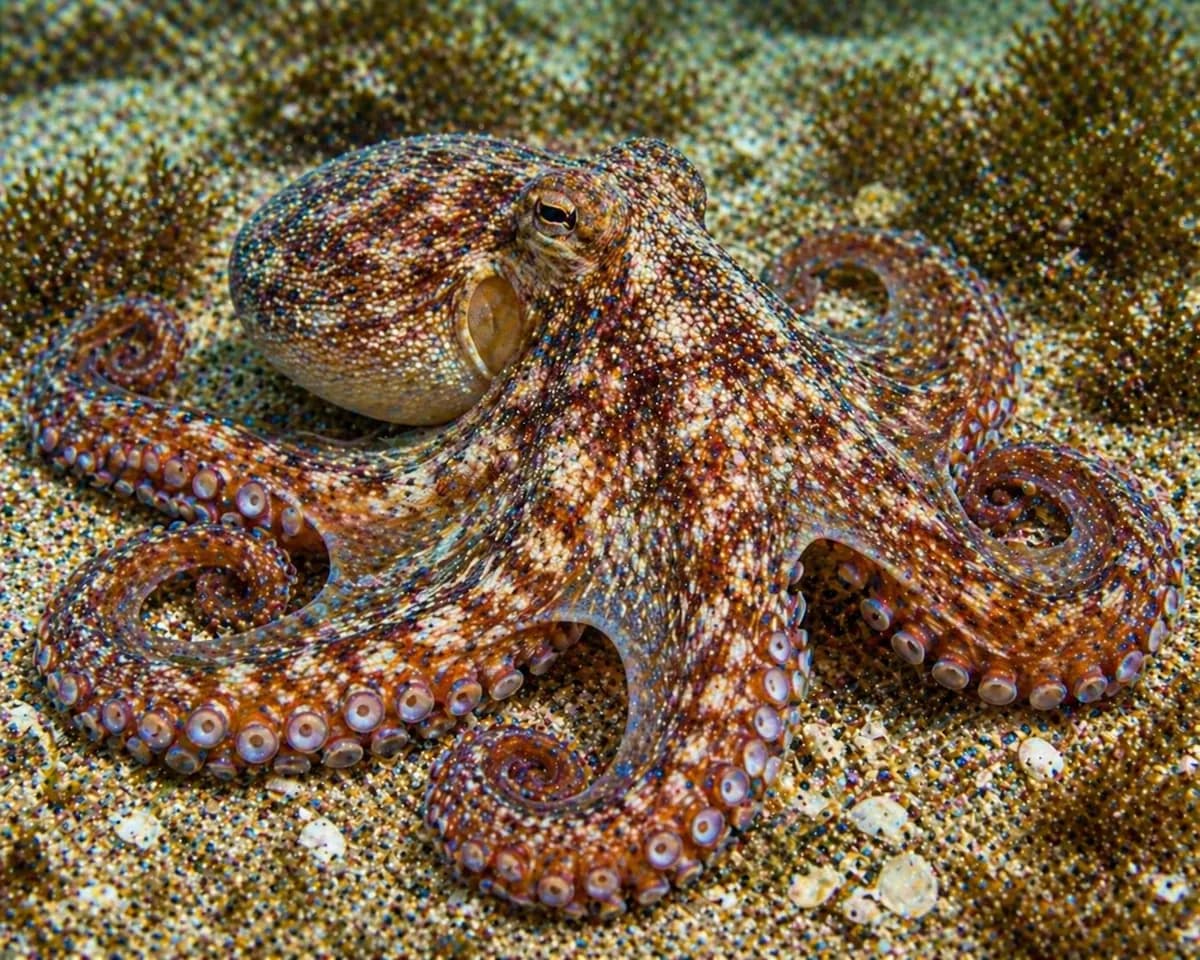
Pale and Gloomy octopus species are pot-caught off TAS, VIC, and SA. Australian product is fresher, less-processed, and far superior to imported tenderised octopus.

Octopus pallidus / Octopus tetricus
Flavour: Tender, mineral, ocean-rich — completely different from frozen imported product
Sustainable· SAFS 2024
Australian Octopus (Octopus pallidus / Octopus tetricus)

Four reasons to choose local

Health

  • Astonishing B12 and iron content
  • Wild — no farming or chemical exposure
  • Lean protein with strong copper and selenium

Economy

  • Important to TAS and VIC small-fleet operators
  • Pot fishery supports owner-operator businesses
  • Niche premium market for restaurants

Environment

  • Pot-caught — near-zero bycatch
  • Species-selective gear
  • Stocks are short-lived and resilient to fishing pressure

Taste

  • Tender when cooked correctly (slow-braised or grilled)
  • Mineral ocean flavour — distinctive
  • Iconic charcoal-grilled with paprika and lemon

Sourcing

Australian Octopus is exclusively wild-caught.

Where it comes from

Australian Octopus is most strongly associated with these 5 Australian regions:

How it's caught or grown

Production volume (last 5 years)

Total Australian annual production of Australian Octopus — wild-catch + aquaculture combined. Sourced from ABARES Australian Fisheries and Aquaculture Statistics.

Production volume (tonnes)Source: ABARES
20193802020350202140020224502023480
primary estimate

How it's managed

Nutrition (per 100g)

How Australian Octopus compares to imported equivalents on the headline nutrients consumers care about.

Protein19g16.4g
Selenium50µg32µg
Iron4.1mg2.6mg
Vitamin B1218µg13µg
Copper2.5mg1.7mg

Contaminants & price

Australian Australian Octopus compared to imported equivalents on mercury, antibiotic residues, and typical retail price. Unflagged metrics come from primary government sources (FSANZ, ABARES); synthesised numbers carry a visible tag.

Metric
Australian
Imported
Mercury (mg/kg)
0.05
0.08
Antibiotic residues
none
rare
Typical retail price (2026 Q1)editorial
$28–45/kg
$22–35/kg

From harvest to plate

Days-to-plate is one of the strongest arguments for buying Australian. Here's the typical timeline for Australian Octopus.

  1. Step 1
    Pot catch
    Day 0 days
  2. Step 2
    Onshore chill / freeze
    0–1 days
  3. Step 3
    Wholesale
    1–3 days
  4. Step 4
    Retail / restaurant
    2–5 days
  5. Total
    Total AUS days to plate
    2–5 days

Seasonality

When to enjoy Australian Octopus at its peak.

Janavailable
Febavailable
Maravailable
Apravailable
Mayavailable
Junavailable
Julavailable
Augavailable
Sepavailable
Octavailable
Novavailable
Decavailable
Peak Good Available Off-season

How to cook it

Four go-to preparations for Australian Octopus that respect the fish — short cooks, clean flavours, no over-doing it.

Slow-braised

1.5h in white wine + bay + garlic, then char-grill briefly.

Char-grilled

Pre-cooked, finish on hot grill, dress with smoked paprika + lemon + olive oil.

Carpaccio

Cooked, sliced paper-thin, citrus + olive oil + capers.

Greek-style

Braise in red wine + tomato + cinnamon, serve with rice.

Full recipe: Char-grilled Octopus with Smoked Paprika

Australian vs imported — at a glance

Australian pot-caught octopus vs imported (often Spanish or Moroccan) tenderised product.

Australia
Australian Octopus
TAS / VIC / SA
🇦🇺 Local
Catch methodPot (low impact)
Mechanical tenderisingNone
Days to plate2–4 days
Vitamin B12 (per 100g)18µg
Price per kg~$40
Overall rating: Australian Octopus scores 8.9/10 — fresh, untreated, under-rated.
vs
Various
Imported Octopus
Spain / Morocco / China
Catch methodVariable
Mechanical tenderisingCommon
Days to plate10–28 days
Vitamin B12 (per 100g)13µg
Price per kg~$30
Overall rating: Imported Octopus scores 6.4/10 — variable origin and treatment.

Read the full comparison →

Look-alikes & how to tell them apart

Products often confused with or substituted for Australian Australian Octopus — and what to look for instead.

Imported octopus (Spain, Morocco, China)
Why confused: Same broad genus; mechanically tenderised before sale.
How to tell: Australian octopus is increasingly sold raw and untreated. Imports often arrive pre-cooked, bleached, or mechanically tenderised.

The risks of the imported version

Typically imported from: Spain, Morocco, China, Vietnam

  • Often tenderised mechanically or chemically
  • Long transit destroys natural texture
  • Origin and species often unverifiable

See the full case against imported seafood →

How to buy it

🔍
Look for:

Ask for "Australian Octopus" — many restaurants and retailers serve imported.

From 1 July 2026, every restaurant menu in Australia must show A (Australian), I (Imported), or M (Mixed) for each seafood dish. Read the law →

Key operators, co-ops & peak bodies

The businesses, co-operatives, and industry bodies behind Australian Australian Octopus.

Historical timeline

  1. 2000
    Trigger-pot gear scales in Tasmania, replacing trap-gear methods.
  2. 2018
    Australian octopus exports to EU and Asia grow as a niche premium category.

Sources for this page

  1. SAFS 2024 Fisheries Research and Development Corporation (2024)

Explore other Australian species

Scroll to browse. Each card links to a full species profile.