All speciesTropical pelagic blade

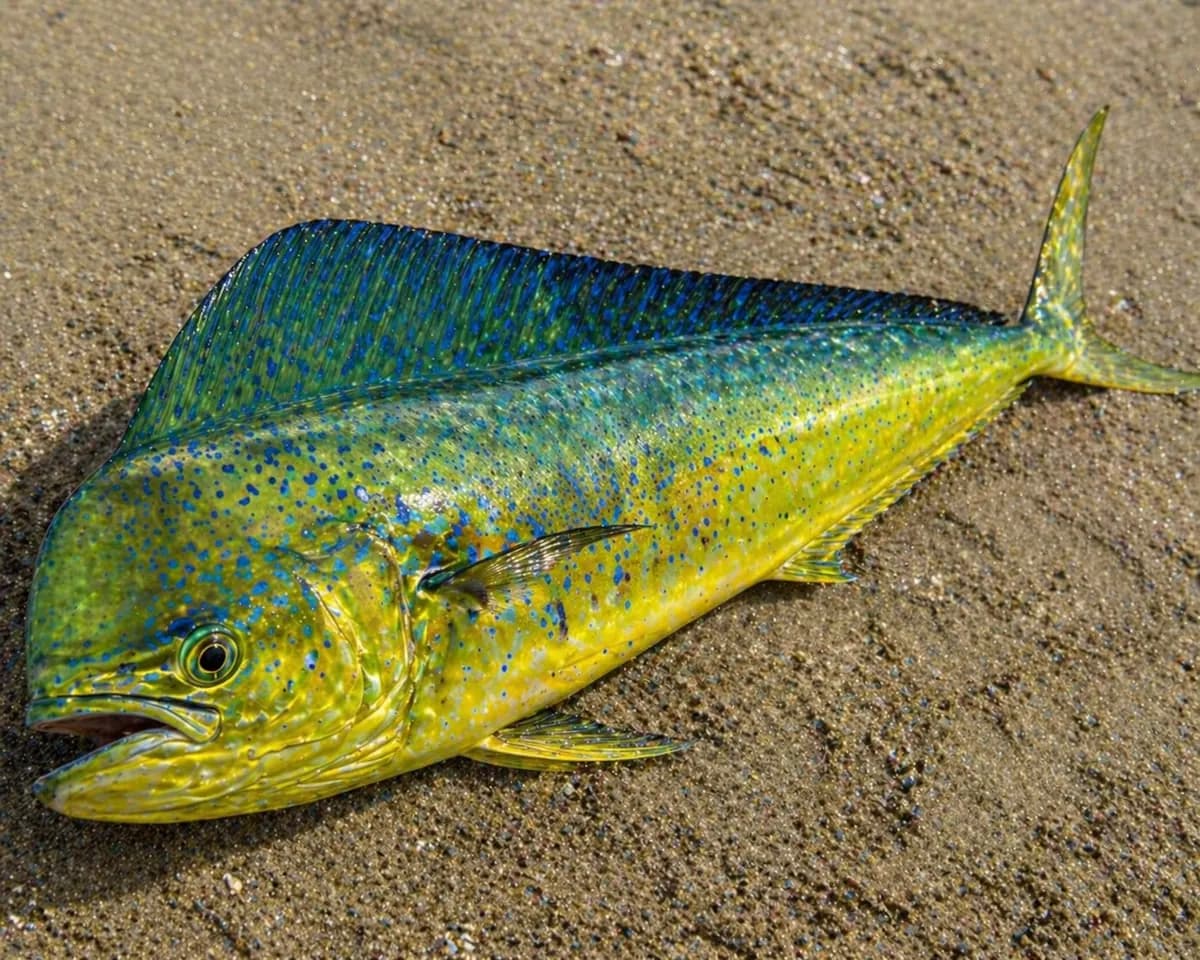
Mahi-mahi

Known locally as ‘dolphinfish’, mahi-mahi are wild-caught off QLD and NSW in the Eastern Tuna and Billfish Fishery — fast-growing and highly sustainable.

Coryphaena hippurus
Flavour: Mild, sweet, firm — takes spice, smoke, and acid superbly
Sustainable· SAFS 2024
Mahi-mahi (Coryphaena hippurus)

Four reasons to choose local

Health

  • Lean, low-mercury (fast-growing species)
  • Strong protein and selenium per serving
  • Wild — no farming residues

Economy

  • Mooloolaba fleet primary supplier
  • Coastal QLD and NSW pelagic boats
  • Charter and sport-fishing tourism boost

Environment

  • Fast-growing — among the most sustainable pelagic fish
  • Caught alongside tuna in Eastern Tuna & Billfish Fishery
  • Stock-status classified sustainable

Taste

  • Distinctive sweet-mild flesh that takes bold flavours
  • Iconic Caribbean and Hawaiian preparations
  • Holds up brilliantly on the BBQ

Sourcing

Mahi-mahi is exclusively wild-caught.

Where it comes from

Mahi-mahi is most strongly associated with these 4 Australian regions:

How it's caught or grown

Production volume (last 5 years)

Total Australian annual production of Mahi-mahi — wild-catch + aquaculture combined. Sourced from ABARES Australian Fisheries and Aquaculture Statistics.

Production volume (tonnes)Source: ABARES
20193202020280202134020223602023380
primary estimate

How it's managed

Nutrition (per 100g)

How Mahi-mahi compares to imported equivalents on the headline nutrients consumers care about.

Protein24.5g22g
Omega-3 Fatty Acids580mg380mg
Selenium48µg32µg
Vitamin D4.2µg2.6µg
Vitamin B123µg2µg

Contaminants & price

Australian Mahi-mahi compared to imported equivalents on mercury, antibiotic residues, and typical retail price. Unflagged metrics come from primary government sources (FSANZ, ABARES); synthesised numbers carry a visible tag.

Metric
Australian
Imported
Mercury (mg/kg)
0.12
0.16
Antibiotic residues
none
rare
Typical retail price (2026 Q1)editorial
$25–38/kg
$16–25/kg

From harvest to plate

Days-to-plate is one of the strongest arguments for buying Australian. Here's the typical timeline for Mahi-mahi.

  1. Step 1
    Catch (longline/troll)
    Day 0 days
  2. Step 2
    Onboard ice/chill
    0–2 days
  3. Step 3
    Port unload & wholesale
    1–3 days
  4. Step 4
    Retail / restaurant
    2–5 days
  5. Total
    Total AUS days to plate
    2–5 days

Seasonality

When to enjoy Mahi-mahi at its peak.

Janpeak
Febpeak
Marpeak
Aprpeak
Maygood
Junavailable
Julavailable
Augavailable
Sepavailable
Octavailable
Novgood
Decpeak
Peak Good Available Off-season

How to cook it

Four go-to preparations for Mahi-mahi that respect the fish — short cooks, clean flavours, no over-doing it.

BBQ steaks

Marinate in lime + chilli + garlic 30 min, hot grill 3 min each side.

Tacos

Pan-sear cubes with chipotle, soft tortilla, slaw + crema.

Ceviche

Cube, lime + jalapeño + red onion 5 min, mango on the side.

Whole roast

Smaller fish whole, lemon + chilli, 200°C 18 min.

Full recipe: Mahi-mahi Tacos with Mango Salsa

Australian vs imported — at a glance

Australian-caught mahi-mahi (Mooloolaba fleet) vs imported long-line or trawl-caught product from Pacific S. America and Vietnam.

Australia
Australian Mahi-mahi
QLD / NSW
🇦🇺 Local
BycatchLow
MercuryLow (fast-growing)
Days to plate2–4 days
Stock statusSustainable
Price per kg~$30
Overall rating: Australian Mahi-mahi scores 8.6/10 — wild, fast-growing, sustainably caught.
vs
Various
Imported Mahi-mahi
Ecuador / Peru / Vietnam
BycatchOften high (long-line)
MercuryVariable
Days to plate10–21 days
Stock statusVariable
Price per kg~$20
Overall rating: Imported Mahi-mahi scores 6.2/10 — long-line bycatch and freshness concerns.

Read the full comparison →

Look-alikes & how to tell them apart

Products often confused with or substituted for Australian Mahi-mahi — and what to look for instead.

Imported mahi-mahi (Ecuador, Peru, Vietnam)
Why confused: Same species (Coryphaena hippurus).
How to tell: Country-of-origin labelling required. Imported product is often pre-frozen and lighter-coloured at thaw.
Generic 'dolphinfish' or 'dorado'
Why confused: Same species under different market names.
How to tell: All refer to mahi-mahi. Check the country of catch — that's the differentiator.

The risks of the imported version

Typically imported from: Pacific Ocean (Ecuador, Peru), Vietnam — often long-line caught

  • Imported long-line product has higher bycatch (turtles, sharks)
  • Often arrives heavily frozen-thawed
  • Variable mercury levels in older fish

See the full case against imported seafood →

How to buy it

🔍
Look for:

Ask for "Australian Mahi-mahi" — explicitly check it isn't Vietnamese imported product.

From 1 July 2026, every restaurant menu in Australia must show A (Australian), I (Imported), or M (Mixed) for each seafood dish. Read the law →

Key operators, co-ops & peak bodies

The businesses, co-operatives, and industry bodies behind Australian Mahi-mahi.

Historical timeline

  1. 1995
    Eastern Tuna and Billfish Fishery formalised under AFMA.
  2. 2010
    Mooloolaba becomes the dominant Australian mahi-mahi unloading port.

Sources for this page

  1. SAFS 2024 Fisheries Research and Development Corporation (2024)

Explore other Australian species

Scroll to browse. Each card links to a full species profile.