All speciesThe summer crab

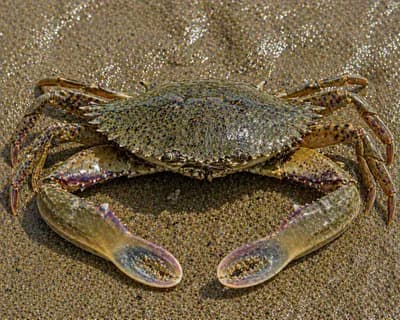
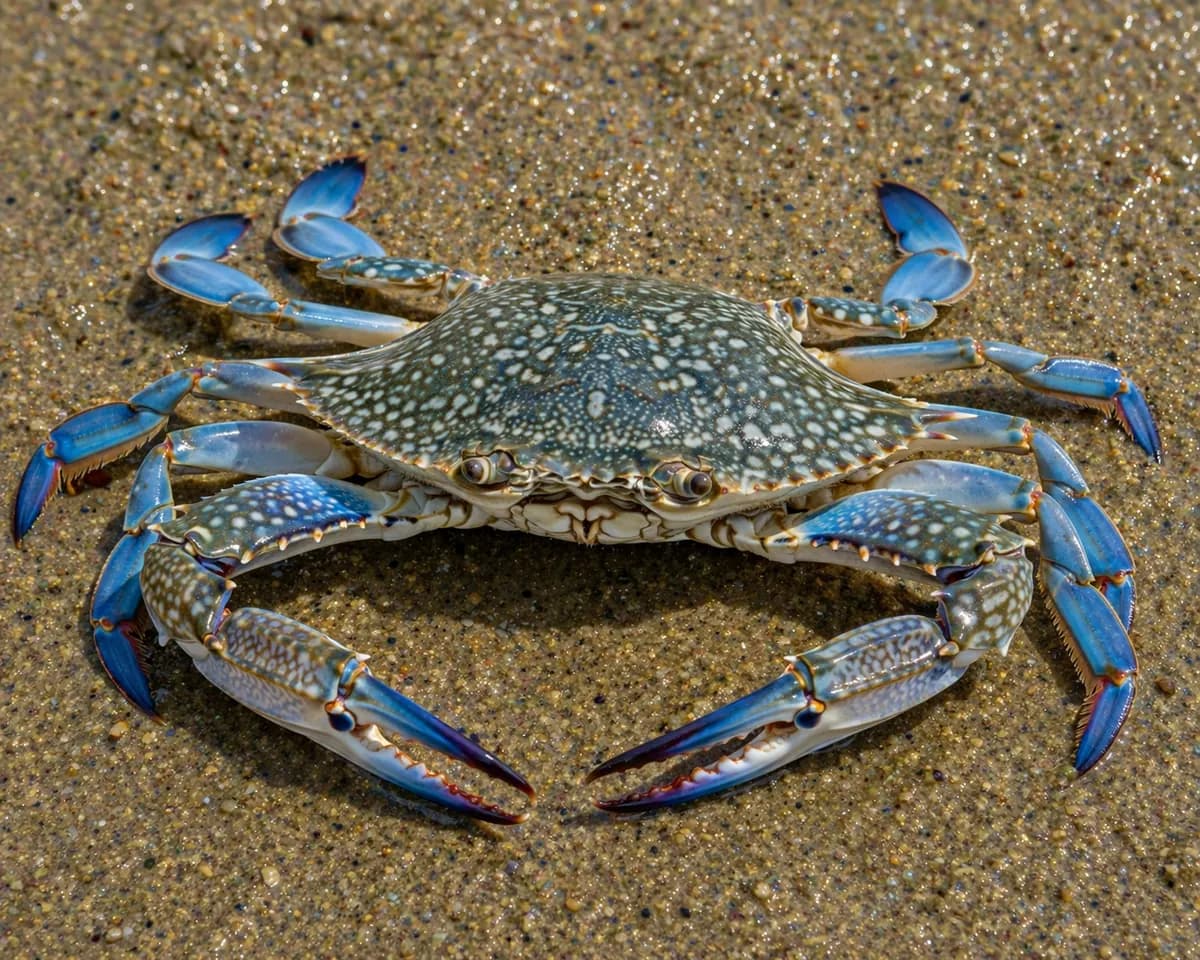
Blue Swimmer Crab

A vivid blue, sweet-meated portunid wild-caught from SA, WA, NSW, and southern QLD. The classic Australian summer crab — sweeter and lighter than its tropical cousin.

Portunus armatus
Flavour: Sweet, delicate, lighter than mud crab — perfect for summer pasta
Sustainable· SAFS 2024
Blue Swimmer Crab (Portunus armatus)

Four reasons to choose local

Health

  • Live or fresh-cooked retains natural sweetness
  • Clean wild waters — no farming residues
  • High in zinc and B12

Economy

  • Important to SA, WA, and NSW estuarine fleets
  • Mandurah (WA) and Spencer Gulf are key hubs
  • Recreational fishery supports coastal tourism

Environment

  • Pot-caught — minimal bycatch
  • Sex and size limits protect the stock
  • Recovery after WA stock-management overhaul

Taste

  • Delicate sweetness — a different fish from mud crab
  • Iconic spaghetti granchio sauce
  • Best simply boiled and shared at the table

Sourcing

Blue Swimmer Crab is exclusively wild-caught.

Where it comes from

Blue Swimmer Crab is most strongly associated with these 5 Australian regions:

How it's caught or grown

Production volume (last 5 years)

Total Australian annual production of Blue Swimmer Crab — wild-catch + aquaculture combined. Sourced from ABARES Australian Fisheries and Aquaculture Statistics.

Production volume (tonnes)Source: ABARES
20197002020650202172020227802023800
primary estimate

How it's managed

Bag limit:10/day (WA recreational)Size limit:127mm carapace (WA)

Nutrition (per 100g)

How Blue Swimmer Crab compares to imported equivalents on the headline nutrients consumers care about.

Protein18.6g16.4g
Selenium44µg30µg
Zinc3.6mg2.6mg
Omega-3 Fatty Acids380mg240mg
Vitamin B126.4µg4.6µg

Contaminants & price

Australian Blue Swimmer Crab compared to imported equivalents on mercury, antibiotic residues, and typical retail price. Unflagged metrics come from primary government sources (FSANZ, ABARES); synthesised numbers carry a visible tag.

Metric
Australian
Imported
Mercury (mg/kg)
0.03
0.05
Antibiotic residues
none
documented
Typical retail price (2026 Q1)editorial
$28–42/kg
$18–28/kg

From harvest to plate

Days-to-plate is one of the strongest arguments for buying Australian. Here's the typical timeline for Blue Swimmer Crab.

  1. Step 1
    Pot catch (live)
    Day 0 days
  2. Step 2
    Holding tanks
    0–1 days
  3. Step 3
    Wholesale (live)
    1–2 days
  4. Step 4
    Retail / restaurant (live)
    2–3 days
  5. Total
    Total AUS days to plate
    2–3 (live) days

Seasonality

When to enjoy Blue Swimmer Crab at its peak.

Janpeak
Febpeak
Marpeak
Aprpeak
Maygood
Junavailable
Julavailable
Augavailable
Sepavailable
Octavailable
Novgood
Decpeak
Peak Good Available Off-season

How to cook it

Four go-to preparations for Blue Swimmer Crab that respect the fish — short cooks, clean flavours, no over-doing it.

Boiled whole

Salted boiling water, 10 min for 500g, cool, crack at the table.

Spaghetti granchio

Picked meat, garlic + chilli + tomato + parsley.

Crab cakes

Picked meat, panko, mayo, pan-fry 3 min each side.

Asian curry

Halved, in a coconut-curry, served with rice and bread.

Full recipe: Spaghetti Granchio

Australian vs imported — at a glance

Live or fresh Australian blue swimmer vs imported pasteurised crab meat tins from SE Asia and India.

Australia
Australian Blue Swimmer
SA / WA / NSW
🇦🇺 Local
FormLive or fresh
Species verifiedYes
Bleach in processingNo
Days to plate1–3 days
Price per kg~$35
Overall rating: Australian Blue Swimmer scores 9.0/10 — fresh, traceable, sweet.
vs
Asia
Imported Crab Meat
Indonesia / Vietnam / India
FormPasteurised tin
Species verifiedOften anonymous
Bleach in processingReported in some origins
Days to plateVariable (pasteurised)
Price per kg~$25
Overall rating: Imported crab meat scores 5.8/10 — anonymous tins of variable quality.

Read the full comparison →

Look-alikes & how to tell them apart

Products often confused with or substituted for Australian Blue Swimmer Crab — and what to look for instead.

Imported tinned crab meat (Indonesia, Vietnam, India)
Why confused: Pasteurised picked meat sold as 'crab'.
How to tell: Australian Blue Swimmer is sold live or fresh-picked. Tinned 'crab meat' is almost always imported.

The risks of the imported version

Typically imported from: Indonesia, Vietnam, India (often as picked ‘crab meat’ tins)

  • Picked imported crab meat is essentially anonymous
  • Pasteurised product loses fresh flavour
  • Some origins use bleach during processing

See the full case against imported seafood →

How to buy it

🔍
Look for:

Ask for "Australian Blue Swimmer Crab" — never anonymous “crab meat”.

From 1 July 2026, every restaurant menu in Australia must show A (Australian), I (Imported), or M (Mixed) for each seafood dish. Read the law →

Key operators, co-ops & peak bodies

The businesses, co-operatives, and industry bodies behind Australian Blue Swimmer Crab.

Historical timeline

  1. 2014
    WA Cockburn Sound closure following stock collapse.
  2. 2019
    Cockburn Sound reopens after rebuilding.

Sources for this page

  1. SAFS 2024 Fisheries Research and Development Corporation (2024)

Explore other Australian species

Scroll to browse. Each card links to a full species profile.