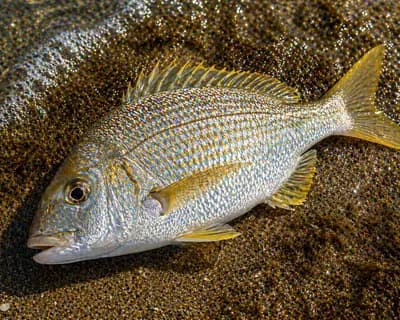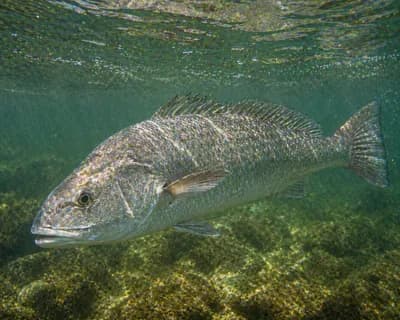
All speciesSouth Australia's beloved table fish

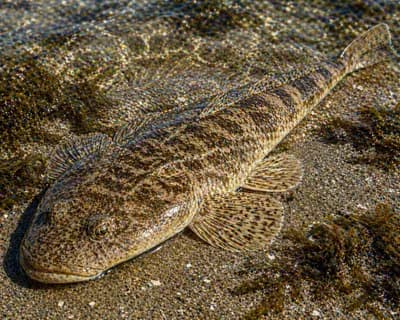
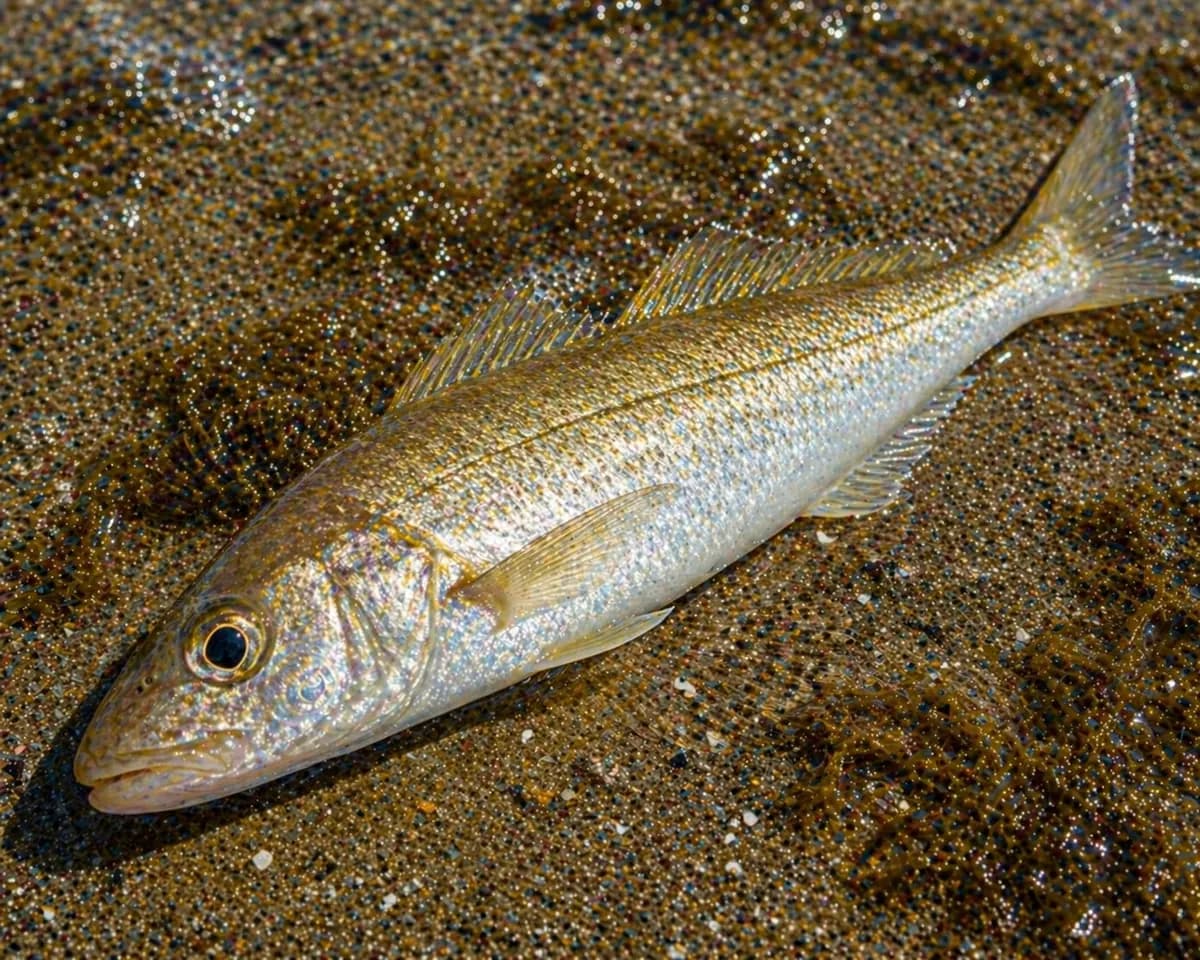
King George Whiting

Endemic to southern Australian waters, King George Whiting is among the country's most prized small table fish — sweet, delicate, and almost exclusively wild-caught.

Sillaginodes punctatus
Flavour: Sweet, delicate, melting white flesh — the finest small fish in Australia
Sustainable· SAFS 2024
King George Whiting (Sillaginodes punctatus)

Four reasons to choose local

Health

  • Low-mercury, low-fat, easily digestible
  • Excellent first fish for children
  • Genuine product — no substitution risk when sourced from Aussie fishmonger

Economy

  • Cornerstone of small-scale SA and VIC fisheries
  • Recreational fishing tourism in Yorke and Eyre peninsulas
  • Premium pricing supports family operators

Environment

  • Endemic species — found nowhere else
  • Bag and size limits protect spawning aggregations
  • Caught using low-impact handlines and small nets

Taste

  • Considered Australia's finest small table fish
  • Sweet flesh that melts when cooked correctly
  • Iconic shallow-fried with lemon

Sourcing

King George Whiting is exclusively wild-caught.

Where it comes from

King George Whiting is most strongly associated with these 4 Australian regions:

How it's caught or grown

Production volume (last 5 years)

Total Australian annual production of King George Whiting — wild-catch + aquaculture combined. Sourced from ABARES Australian Fisheries and Aquaculture Statistics.

Production volume (tonnes)Source: ABARES
20197502020700202172020227602023780
primary estimate

How it's managed

Bag limit:20/day (SA recreational)Size limit:31cm (SA)

Nutrition (per 100g)

How King George Whiting compares to imported equivalents on the headline nutrients consumers care about.

Protein20.8g18.4g
Omega-3 Fatty Acids380mg220mg
Selenium41µg26µg
Iodine32µg18µg
Vitamin B122.4µg1.6µg

Contaminants & price

Australian King George Whiting compared to imported equivalents on mercury, antibiotic residues, and typical retail price. Unflagged metrics come from primary government sources (FSANZ, ABARES); synthesised numbers carry a visible tag.

Metric
Australian
Imported
Mercury (mg/kg)
0.04
0.1
Antibiotic residues
none
rare
Typical retail price (2026 Q1)editorial
$45–75/kg
$18–28/kg

From harvest to plate

Days-to-plate is one of the strongest arguments for buying Australian. Here's the typical timeline for King George Whiting.

  1. Step 1
    Catch (line/net)
    Day 0 days
  2. Step 2
    Onshore chill
    0–1 days
  3. Step 3
    Wholesale
    1–2 days
  4. Step 4
    Retail / restaurant
    2–3 days
  5. Total
    Total AUS days to plate
    2–3 days

Seasonality

When to enjoy King George Whiting at its peak.

Janavailable
Febavailable
Margood
Aprpeak
Maypeak
Junpeak
Julpeak
Augpeak
Seppeak
Octpeak
Novgood
Decavailable
Peak Good Available Off-season

How to cook it

Four go-to preparations for King George Whiting that respect the fish — short cooks, clean flavours, no over-doing it.

Pan-fry whole

Score, dust in flour, 2 min each side in butter. Lemon. Done.

Crumbed fillet

Egg-and-panko, shallow fry 90 sec each side.

Steamed

Whole, with shallot and ginger, 8 min. Hot oil over the top.

Sashimi

Larger fillets only — slice thin, citrus + sea salt.

Full recipe: Pan-fried Whiting with Brown Butter & Capers

Australian vs imported — at a glance

Endemic Australian King George Whiting vs imported ‘whiting’ products — typically unrelated species at retail.

Australia
King George Whiting
SA / VIC
🇦🇺 Local
Endemic to AustraliaYes
Wild caughtHand-line / small net
Mislabelling riskLow
MercuryLow
Days to plate2–3 days
Price per kg (fillet)~$55
Overall rating: King George Whiting scores 9.4/10 — endemic, premium, irreplaceable.
vs
Various
Imported ‘Whiting’
Pacific / Africa
Endemic to AustraliaNo
Wild caughtVariable
Mislabelling riskSignificant
MercuryVariable
Days to plate10–21 days
Price per kg (fillet)~$22
Overall rating: Imported ‘whiting’ scores 5.0/10 — usually a different species.

Read the full comparison →

Look-alikes & how to tell them apart

Products often confused with or substituted for Australian King George Whiting — and what to look for instead.

Imported 'whiting'
Why confused: Various Pacific/African whiting species sold as generic 'whiting'.
How to tell: King George Whiting is endemic to southern Australia. Genuine product is named explicitly — accept no substitutes.
Sand Whiting / School Whiting
Why confused: Different Australian whiting species; less prized but often labelled simply 'whiting'.
How to tell: King George is larger, with characteristic golden spots; firmer texture. Worth 2–3× the price of generic whiting.

The risks of the imported version

Typically imported from: Imported ‘whiting’ products are typically unrelated species — Pacific or African origin

  • Imported ‘whiting’ is rarely the same species or family
  • Substantial mislabelling risk at retail
  • Long transit destroys the delicate texture

See the full case against imported seafood →

How to buy it

🔍
Look for:

Ask explicitly for "King George Whiting" — most other “whiting” on Australian menus is School or Sand Whiting.

From 1 July 2026, every restaurant menu in Australia must show A (Australian), I (Imported), or M (Mixed) for each seafood dish. Read the law →

Key operators, co-ops & peak bodies

The businesses, co-operatives, and industry bodies behind Australian King George Whiting.

Historical timeline

  1. 1945
    Targeted commercial fishery established in Spencer Gulf.
  2. 1990
    Strict bag limits introduced as recreational pressure rises.

Sources for this page

  1. SAFS 2024 Fisheries Research and Development Corporation (2024)

Explore other Australian species

Scroll to browse. Each card links to a full species profile.