All speciesThe silver giant

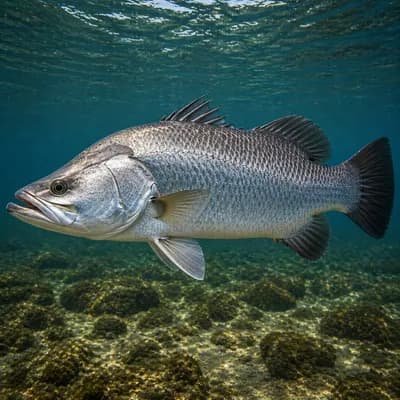
Mulloway

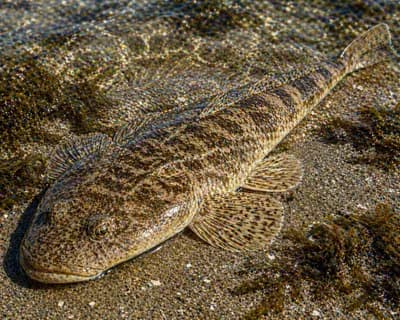
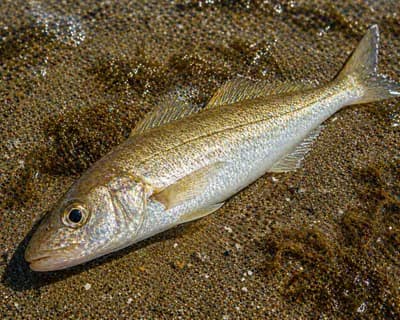
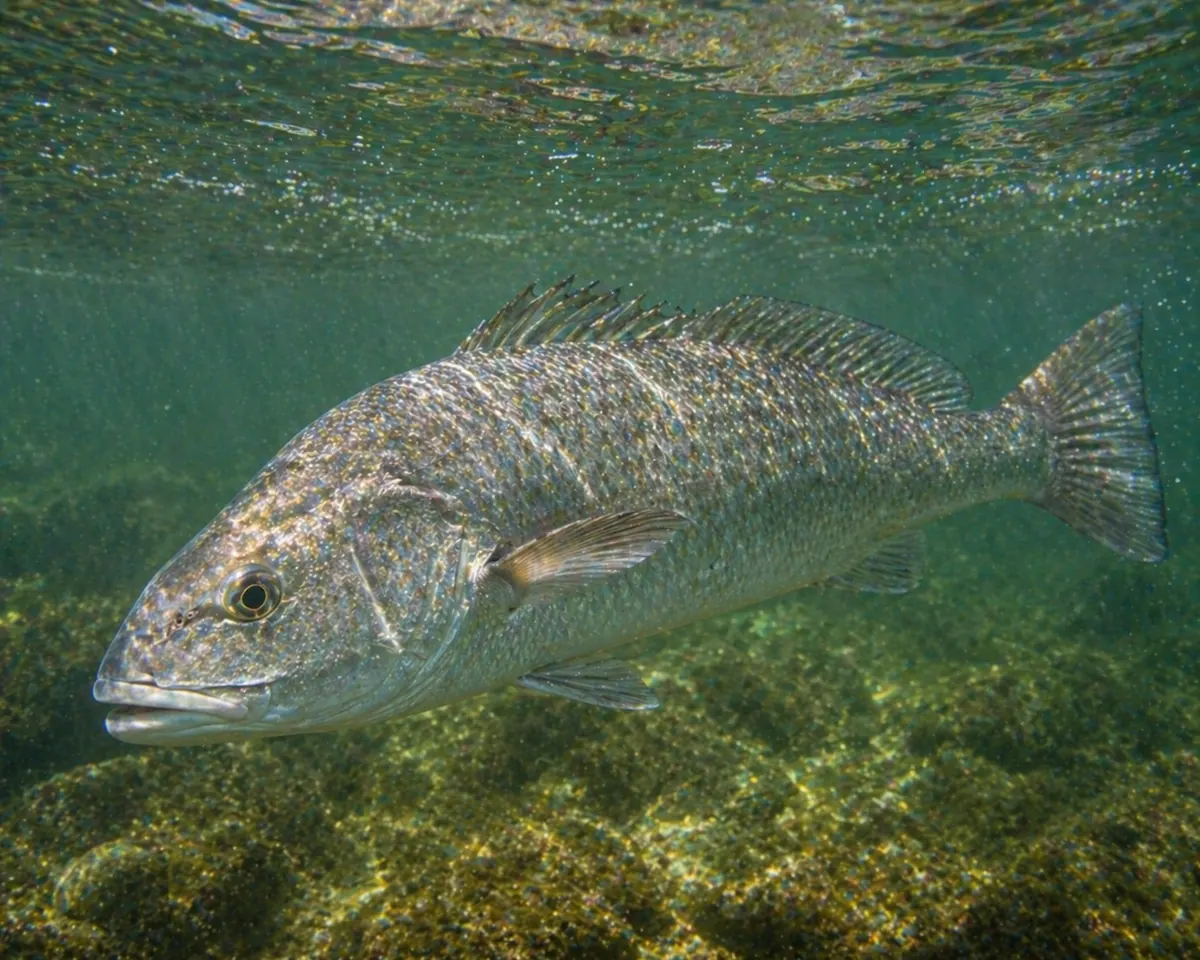
A large, silver-flanked predator of southern Australian estuaries and beaches — mulloway is a recreational trophy and an excellent table fish prized by chefs.

Argyrosomus japonicus
Flavour: Firm, white, slightly oily — holds up to robust treatment and curing
Recovering· SAFS 2024
Mulloway (Argyrosomus japonicus)

Four reasons to choose local

Health

  • Low-mercury despite being a large predator
  • Strong omega-3 profile — close to oily-fish levels
  • Wild estuarine stock with no farming contaminants

Economy

  • Important commercial estuarine species (Coorong, NSW estuaries)
  • Recreational trophy fish drives tourism
  • Yamba, Coorong, and SA estuary fleets rely on it

Environment

  • Recovering wild stocks after historic overfishing
  • Stock-status assessed every two years
  • Coorong Indigenous co-management informs quotas

Taste

  • Pristine cured (gravlax) — chef-favourite
  • Holds up to roasting and grilling
  • A quietly world-class table fish

Sourcing

Mulloway is exclusively wild-caught.

Where it comes from

Mulloway is most strongly associated with these 3 Australian regions:

How it's caught or grown

Production volume (last 5 years)

Total Australian annual production of Mulloway — wild-catch + aquaculture combined. Sourced from ABARES Australian Fisheries and Aquaculture Statistics.

Production volume (tonnes)Source: ABARES
20193502020320202134020223802023400
primary estimate

How it's managed

Bag limit:2/day (SA recreational)Size limit:75cm (SA)

Nutrition (per 100g)

How Mulloway compares to imported equivalents on the headline nutrients consumers care about.

Protein22.5g19.4g
Omega-3 Fatty Acids720mg410mg
Selenium44µg28µg
Vitamin D5.5µg3.4µg
Vitamin B122.8µg1.9µg

Contaminants & price

Australian Mulloway compared to imported equivalents on mercury, antibiotic residues, and typical retail price. Unflagged metrics come from primary government sources (FSANZ, ABARES); synthesised numbers carry a visible tag.

Metric
Australian
Imported
Mercury (mg/kg)
0.18
0.22
Antibiotic residues
none
rare
Typical retail price (2026 Q1)editorial
$30–45/kg
$18–28/kg

From harvest to plate

Days-to-plate is one of the strongest arguments for buying Australian. Here's the typical timeline for Mulloway.

  1. Step 1
    Coorong catch
    Day 0 days
  2. Step 2
    Onshore chill / Indigenous coop
    0–1 days
  3. Step 3
    Wholesale
    1–2 days
  4. Step 4
    Retail / chef-restaurant
    2–3 days
  5. Total
    Total AUS days to plate
    2–3 days

Seasonality

When to enjoy Mulloway at its peak.

Jangood
Febpeak
Marpeak
Aprpeak
Maypeak
Jungood
Julavailable
Augavailable
Sepavailable
Octavailable
Novgood
Decgood
Peak Good Available Off-season

How to cook it

Four go-to preparations for Mulloway that respect the fish — short cooks, clean flavours, no over-doing it.

Cure (gravlax)

Salt + sugar + dill, 36h, slice paper-thin.

Whole roast

Salt-crust, 220°C 30 min for 1.5kg, crack at the table.

Pan-sear

Skin-on, hot pan, 4 min skin side, 1 min flesh.

Ceviche

Diced, lime + chilli + coriander 5 min — firm flesh holds well.

Full recipe: Mulloway Gravlax with Citrus & Fennel

Australian vs imported — at a glance

Wild Australian Mulloway vs imported corvina/jewfish — sciaenid relatives but very different products.

Australia
Australian Mulloway
SA / NSW estuaries
🇦🇺 Local
Wild caughtYes
Same species?Argyrosomus japonicus
MercuryLow for size
Stock-status reportsRecovering
Indigenous co-managementCoorong yes
Price per kg~$35
Overall rating: Australian Mulloway scores 8.7/10 — rebuilding wild stock, premium chef-favourite.
vs
Various
Imported Corvina
South America
Wild caughtVariable
Same species?Different species
MercuryVariable
Stock-status reportsVariable
Indigenous co-managementNo
Price per kg~$22
Overall rating: Imported Corvina scores 5.8/10 — unrelated species marketed under similar names.

Read the full comparison →

Look-alikes & how to tell them apart

Products often confused with or substituted for Australian Mulloway — and what to look for instead.

Imported corvina (South America)
Why confused: Same family (Sciaenidae); generic 'jewfish' label.
How to tell: Australian mulloway has firmer, drier flesh and is sold whole or as identifiable fillets. Imports are usually frozen, vacuum-packed.

The risks of the imported version

Typically imported from: Imported ‘jewfish’ or ‘corvina’ from S. America (sciaenid family)

  • Imported corvina is a different species from variable origins
  • Long-haul refrigeration damages firm-flesh texture
  • Trace metals and origin verification often weak

See the full case against imported seafood →

How to buy it

🔍
Look for:

Ask for "Australian Mulloway" or "Coorong Mulloway" — never confuse with imported corvina/jewfish.

From 1 July 2026, every restaurant menu in Australia must show A (Australian), I (Imported), or M (Mixed) for each seafood dish. Read the law →

Key operators, co-ops & peak bodies

The businesses, co-operatives, and industry bodies behind Australian Mulloway.

Historical timeline

  1. 1981
    Coorong commercial fishery formalised.
  2. 2009
    Ngarrindjeri co-management arrangements scale.
  3. 2020
    Stock rebuilding measures introduced after multi-year decline.

Sources for this page

  1. SAFS 2024 Fisheries Research and Development Corporation (2024)

Explore other Australian species

Scroll to browse. Each card links to a full species profile.