All speciesWorld's first MSC fishery

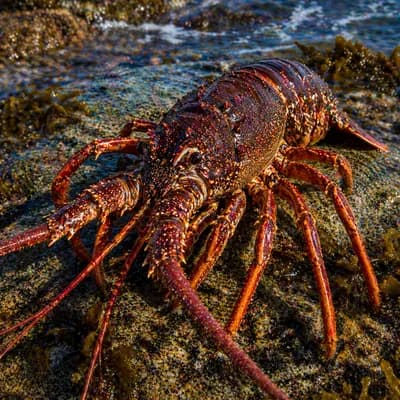
Western Rock Lobster

The Western Australian rock lobster fishery was the world's first to achieve MSC certification in 2000 and remains a benchmark for sustainable wild-capture management.

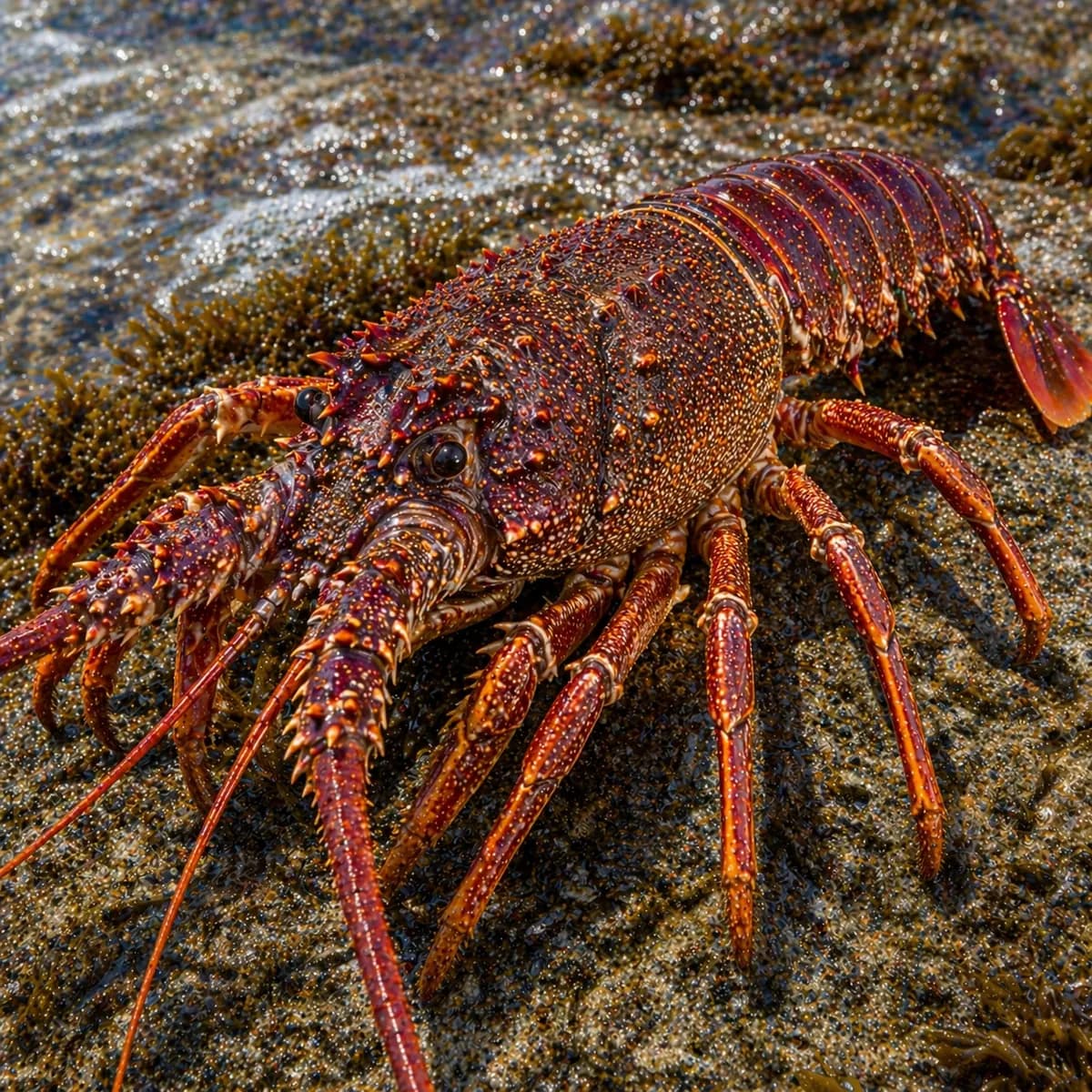
Panulirus cygnus
Flavour: Sweet, slightly drier than its southern cousin; iconic of WA
Sustainable· SAFS 2024
Western Rock Lobster (Panulirus cygnus)

Four reasons to choose local

Health

  • Lean, mineral-rich protein from pristine WA waters
  • Pot-caught — zero chemical exposure
  • Premium-grade selenium and zinc content

Economy

  • Geraldton and the Abrolhos Islands depend on the fishery
  • World-class live-export operation funds local infrastructure
  • Roughly 200 licensed boats with multi-generation family operators

Environment

  • World's first MSC-certified fishery (2000)
  • ITQ quota system, science-led
  • Pot fishery — bycatch is minimal

Taste

  • Drier, sweeter cousin of the Southern Rock
  • Iconic to WA cuisine
  • Best appreciated split & grilled with butter

Sourcing

Western Rock Lobster is exclusively wild-caught.

Where it comes from

Western Rock Lobster is most strongly associated with these 4 Australian regions:

How it's caught or grown

Production volume (last 5 years)

Total Australian annual production of Western Rock Lobster — wild-catch + aquaculture combined. Sourced from ABARES Australian Fisheries and Aquaculture Statistics.

Production volume (tonnes)Source: ABARES
20198,50020207,80020218,90020229,20020239,400
primary estimate

How it's managed

Quota:6,300tSize limit:76mm (WA carapace)

ITQ system in WA since 2010; strict carapace size limits; pot-licence caps; no take of berried (egg-carrying) females.

Nutrition (per 100g)

How Western Rock Lobster compares to imported equivalents on the headline nutrients consumers care about.

Protein20.2g18.9g
Selenium70µg55µg
Vitamin B121.4µg1µg
Zinc3.5mg2.8mg
Copper1.6mg1.2mg

Contaminants & price

Australian Western Rock Lobster compared to imported equivalents on mercury, antibiotic residues, and typical retail price. Unflagged metrics come from primary government sources (FSANZ, ABARES); synthesised numbers carry a visible tag.

Metric
Australian
Imported
Mercury (mg/kg)
0.06
0.08
Antibiotic residues
none
none
Typical retail price (2026 Q1)editorial
$70–180/kg
$60–140/kg

From harvest to plate

Days-to-plate is one of the strongest arguments for buying Australian. Here's the typical timeline for Western Rock Lobster.

  1. Step 1
    Pot haul (live)
    Day 0 days
  2. Step 2
    Onshore holding tanks
    0–2 days
  3. Step 3
    Wholesale (live)
    1–3 days
  4. Step 4
    Retail / restaurant (live)
    2–5 days
  5. Total
    Total AUS days to plate (live)
    2–5 days

Seasonality

When to enjoy Western Rock Lobster at its peak.

Janpeak
Febpeak
Marpeak
Aprpeak
Maypeak
Junpeak
Julgood
Augavailable
Sepavailable
Octavailable
Novavailable
Decgood
Peak Good Available Off-season

How to cook it

Four go-to preparations for Western Rock Lobster that respect the fish — short cooks, clean flavours, no over-doing it.

Split & grill

Halve live, garlic butter, grill 6 min cut-side down, 3 min flesh-up.

Mornay

Béchamel + gruyère, fill the half-shell, gratinate.

Sashimi

Live, spiked, sliced tail meat — soy + wasabi only.

Thermidor

Cognac-cream sauce, back in shell, gratinate.

Australian vs imported — at a glance

MSC-certified Western Rock Lobster (the world's first MSC fishery) vs imported lobster.

Australia
Western Rock Lobster
Western Australia
🇦🇺 Local
MSC Certified Since2000
Protein (per 100g)20.2g
Wild vs. FarmedWild-caught (pots)
Quota ManagementITQ
Bycatch RateVery low (pot fishery)
Live Trade StandardsWorld-leading
Price per kg~$110
Overall rating: Western Rock Lobster scores 9.6/10 — global benchmark for sustainable wild-capture lobster.
vs
N. America / Caribbean
Imported Lobster
Canada / USA / Cuba
MSC Certified SinceVariable
Protein (per 100g)18.9g
Wild vs. FarmedWild-caught
Quota ManagementVariable
Bycatch RateVariable
Live Trade StandardsVariable
Price per kg~$70
Overall rating: Imported lobster scores 6.5/10 — freshness varies, especially for frozen or long-haul live shipments.

Read the full comparison →

Look-alikes & how to tell them apart

Products often confused with or substituted for Australian Western Rock Lobster — and what to look for instead.

Imported warm-water lobster / slipper lobster
Why confused: Sometimes sold as generic 'lobster' in frozen form.
How to tell: Australian Rock Lobster is sold alive or whole-cooked. Labels are explicit — 'Southern Rock Lobster' or 'Western Rock Lobster'.
Imported Maine / Canadian lobster
Why confused: True-claw lobster (Homarus americanus); confused by consumers unfamiliar with Australian spiny lobster.
How to tell: Australian rock lobsters have no large claws. If it has massive front claws, it's a cold-water Atlantic lobster.

The risks of the imported version

Typically imported from: Canada, USA, Cuba

  • MSC equivalence not always present in imported origins
  • Frozen-thawed product common — texture suffers
  • Live transit by air freight is high carbon

See the full case against imported seafood →

How to buy it

🔍
Look for:

Look for the MSC blue tick — Western Rock Lobster has been MSC-certified since 2000.

From 1 July 2026, every restaurant menu in Australia must show A (Australian), I (Imported), or M (Mixed) for each seafood dish. Read the law →

Key operators, co-ops & peak bodies

The businesses, co-operatives, and industry bodies behind Australian Western Rock Lobster.

Historical timeline

  1. 1963
    WA Rock Lobster fishery introduces pot-licence limitation — one of the earliest managed fisheries in the world.
  2. 1993
    ITQ (Individual Transferable Quota) feasibility studies begin.
  3. 2000
    WA Rock Lobster becomes the first MSC-certified fishery globally.
  4. 2010
    WA moves from effort (pot days) to output (ITQ) controls.
  5. 2020
    Export disruption (China relations) prompts domestic market development.

In the news

Sources for this page

  1. Western Rock Lobster MSC (2000) Marine Stewardship Council (2000)

Explore other Australian species

Scroll to browse. Each card links to a full species profile.